
发布时间:
来源:
欧洲侨报
reporter:jessica gao(UK)
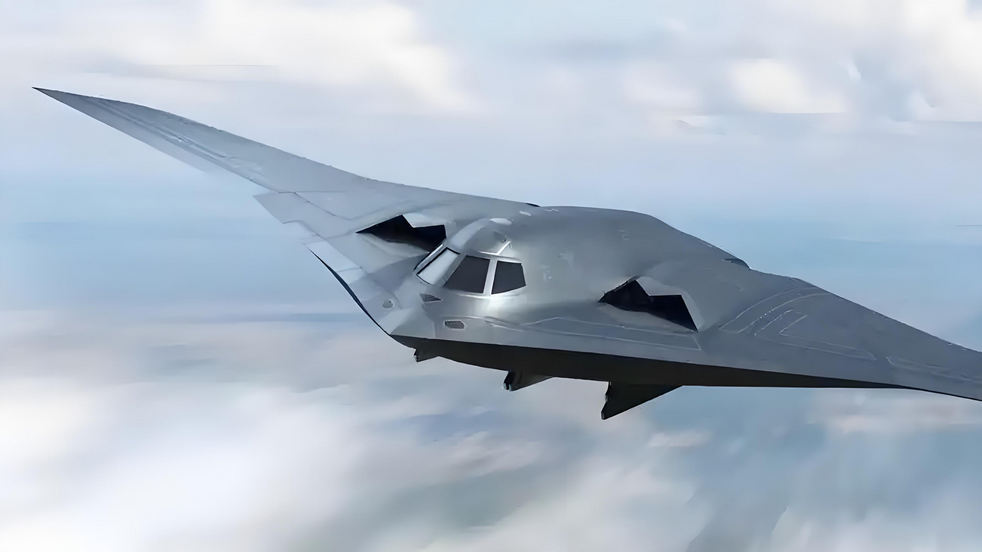 Just before dawn on 22 June 2025, the skies above Iran savored an eerie calm. But beneath the desert stillness, a storm brewed—Operation Midnight Hammer was unleashed, marking America's first open military strike in the Iran–Israel war .
The Strike Unfolds
In a meticulously planned 18-hour mission, seven B‑2 Spirit stealth bombers and a missile-firing U.S. Navy submarine converged on Iran’s Fordow, Natanz, and Isfahan nuclear sites. The bombers dropped fourteen GBU‑57 “Massive Ordnance Penetrators”, each weighing 13,000 kg, while the submarine launched ≈30 Tomahawk cruise missiles at Isfahan .
Pentagon officials later hailed the operation as “surgically precise,” employing stealth and power to achieve maximum impact with minimal civilian harm .
Immediate Aftermath
Satellite images days later reveal damage assessments underway. At Fordow, trucks, cranes, and excavation crews suggest Iran is methodically probing underground structures—potentially to repair or assess damage .
Despite fierce explosions, Iran and IAEA officials reported no radiation leaks, assuring nearby residents remained safe—no contamination recorded . The Iranian Atomic Energy Organization declared its nuclear industry would continue undeterred .
What Was Hit—And How Deep?
Fordow: Targeted with 12 MOPs, designed to penetrate 18 m of reinforced concrete—though Iranian structures may exceed 30,000 psi, potentially reducing bomb efficacy .
Natanz: Hit by two bunker-busters, damaging its centrifuge cascades .
Isfahan: Subjected to Tomahawk missile strikes aimed at above-ground facilities and storage tunnels .
Casualties and Damage Assessment
Iran reported no civilian deaths from radiation, though at least 11 people were wounded during the strikes .
Initial American intelligence, including leaked DIA reports, suggested the strikes inflicted only a short-term delay of several months on Iran’s nuclear program, contradicting President Trump’s public claim of complete obliteration .
International and Regional Reactions
United Nations: Secretary-General Guterres described the strikes as a “dangerous escalation,” urging restraint to avoid wider conflict .
Iran: Foreign Minister Araghchi condemned the attack as a violation of international law and the NPT, warning of “everlasting consequences,” and urging a proportionate defense . Tehran also suspended cooperation with the IAEA following a parliamentary directive .
U.S.: President Trump and Pentagon officials defended the strike as targeted and justified, claiming a definitive blow to Iran’s nuclear ambitions .
Israel: Prime Minister Netanyahu lauded the operation as a historic, decisive act and reaffirmed U.S.–Israel defense collaboration .
Other Nations: Russia condemned the U.S. for “unprovoked aggression,” while European leaders—Britain, France, Germany—urged de-escalation and reaffirmed diplomatic commitments .
Strategic and Geopolitical Implications
This comes amid deeper strains within the so-called "Crinks" alliance (China, Russia, Iran, North Korea), with Moscow reportedly distancing itself from Iran and questioning partnerships destabilized by espionage concerns .
Some U.S. foreign policy strategists argue the attack grants America a “sequencing” advantage: dismantling immediate threats in the Middle East before pivoting to greater challenges like China—though this approach demands delicate diplomacy to avoid overextension .
The Non-Proliferation Fallout
Critics warn the strikes could undermine the global structure of nuclear oversight. Iran's suspension from the IAEA, coupled with fear of reprisals, may prompt Tehran to abandon transparency and rejoin the NPT in bad faith .
Immediate Risks and Next Steps
Retaliation Threats: ICCG forces in Yemen and Syria are placing U.S. bases under new threats; Iranian IRGC has hinted at possible missile or drone strikes targeting American personnel .
Economic Signals: Oil markets initially rose over 10% on fears over the Strait of Hormuz, though global
The Strike Unfolds
In a meticulously planned 18-hour mission, seven B‑2 Spirit stealth bombers and a missile-firing U.S. Navy submarine converged on Iran’s Fordow, Natanz, and Isfahan nuclear sites. The bombers dropped fourteen GBU‑57 “Massive Ordnance Penetrators”, each weighing 13,000 kg, while the submarine launched ≈30 Tomahawk cruise missiles at Isfahan .
Pentagon officials later hailed the operation as “surgically precise,” employing stealth and power to achieve maximum impact with minimal civilian harm .
Immediate Aftermath
Satellite images days later reveal damage assessments underway. At Fordow, trucks, cranes, and excavation crews suggest Iran is methodically probing underground structures—potentially to repair or assess damage .
Despite fierce explosions, Iran and IAEA officials reported no radiation leaks, assuring nearby residents remained safe—no contamination recorded . The Iranian Atomic Energy Organization declared its nuclear industry would continue undeterred .
What Was Hit—And How Deep?
Fordow: Targeted with 12 MOPs, designed to penetrate 18 m of reinforced concrete—though Iranian structures may exceed 30,000 psi, potentially reducing bomb efficacy .
Natanz: Hit by two bunker-busters, damaging its centrifuge cascades .
Isfahan: Subjected to Tomahawk missile strikes aimed at above-ground facilities and storage tunnels .
Casualties and Damage Assessment
Iran reported no civilian deaths from radiation, though at least 11 people were wounded during the strikes .
Initial American intelligence, including leaked DIA reports, suggested the strikes inflicted only a short-term delay of several months on Iran’s nuclear program, contradicting President Trump’s public claim of complete obliteration .
International and Regional Reactions
United Nations: Secretary-General Guterres described the strikes as a “dangerous escalation,” urging restraint to avoid wider conflict .
Iran: Foreign Minister Araghchi condemned the attack as a violation of international law and the NPT, warning of “everlasting consequences,” and urging a proportionate defense . Tehran also suspended cooperation with the IAEA following a parliamentary directive .
U.S.: President Trump and Pentagon officials defended the strike as targeted and justified, claiming a definitive blow to Iran’s nuclear ambitions .
Israel: Prime Minister Netanyahu lauded the operation as a historic, decisive act and reaffirmed U.S.–Israel defense collaboration .
Other Nations: Russia condemned the U.S. for “unprovoked aggression,” while European leaders—Britain, France, Germany—urged de-escalation and reaffirmed diplomatic commitments .
Strategic and Geopolitical Implications
This comes amid deeper strains within the so-called "Crinks" alliance (China, Russia, Iran, North Korea), with Moscow reportedly distancing itself from Iran and questioning partnerships destabilized by espionage concerns .
Some U.S. foreign policy strategists argue the attack grants America a “sequencing” advantage: dismantling immediate threats in the Middle East before pivoting to greater challenges like China—though this approach demands delicate diplomacy to avoid overextension .
The Non-Proliferation Fallout
Critics warn the strikes could undermine the global structure of nuclear oversight. Iran's suspension from the IAEA, coupled with fear of reprisals, may prompt Tehran to abandon transparency and rejoin the NPT in bad faith .
Immediate Risks and Next Steps
Retaliation Threats: ICCG forces in Yemen and Syria are placing U.S. bases under new threats; Iranian IRGC has hinted at possible missile or drone strikes targeting American personnel .
Economic Signals: Oil markets initially rose over 10% on fears over the Strait of Hormuz, though global